PLOV
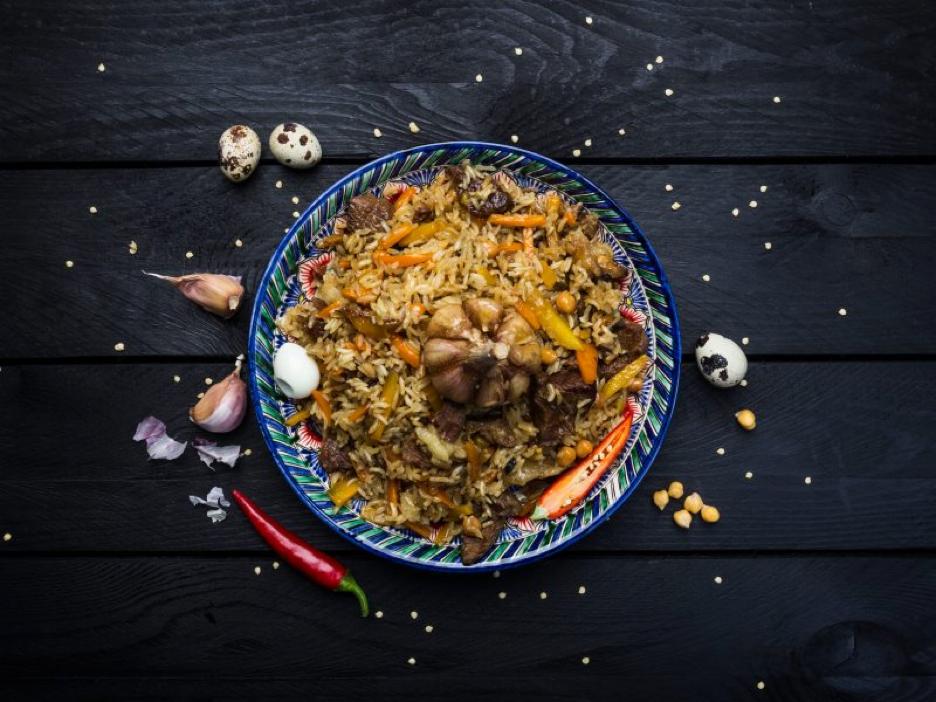
Uzbekistan’s national dish is plov (also known as osh), an oily rice-based dish with pieces of meat, grated carrots, onions and, if you are particularly fortunate, roasted garlic and hard-boiled egg. It is typically available at lunchtime and after, and is popular at weddings and other large celebrations when male chefs (oshpaz) cook huge quantities outdoors in giant dishes known as kazans.
The largest serving of plov weighs 7,360 kg (16,226 lb 0 oz) created by Milliy TV (Uzbekistan) in Tashkent, Uzbekistan, on 8 September 2017. Hugely popular across Central Asia, plov is nothing less than a national obsession in Uzbekistan. Last week, Uzbek chefs produced a portion of the rice-based dish so big that it entered the Guinness Book of World Records.
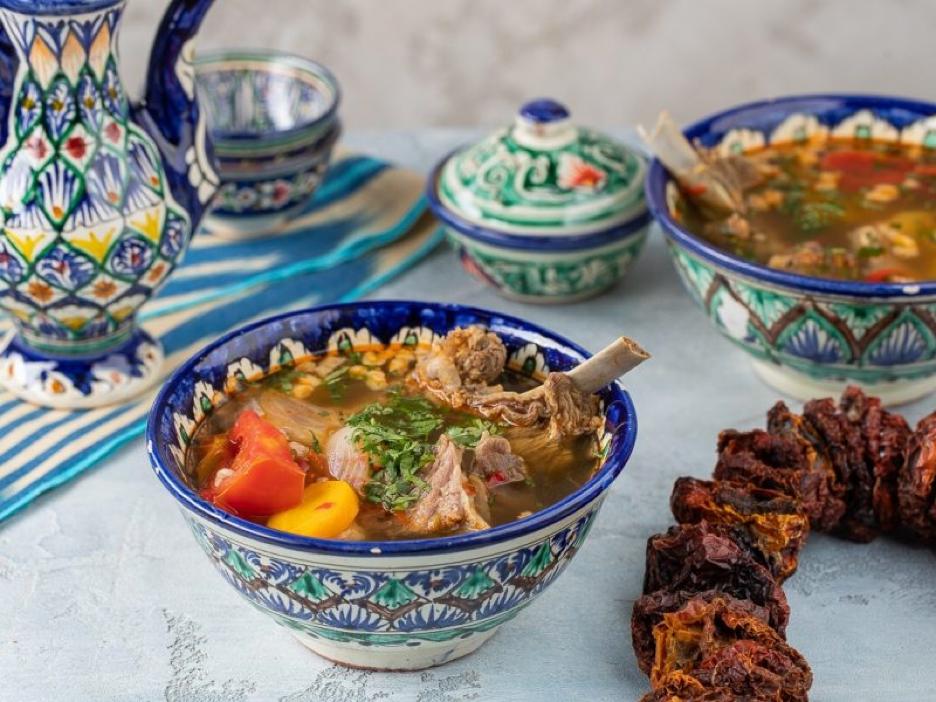
Shurpa (also spelled shorwa, shorpo) is a rich and thick soup that will help you enhance your physical power and regain strength if you have lost it, ranks among the foremost first-course dishes of the Uzbek cuisine. There are two main types of this dish – kaynatma shurpa and kovurma shurpa, which differ mainly in the way of their preparation; however, there actually is a great variety of recipes of cooking shurpa, as each region of Uzbekistan prides itself upon its own specificities and secrets.
Kaynatma shurpa (Uzbek ‘kaynatmok’ – ‘to boil’) is a diet dish consisting of only meat broth and boiled vegetables.
Kovurma shurpa (Uzbek ‘kovurmok’ – ‘to fry’) requires the same ingredients, but is cooked in a cauldron, as the meat should first be fried together with onion and carrot. Then water is added, and after the meat is ready, vegetables are put too.
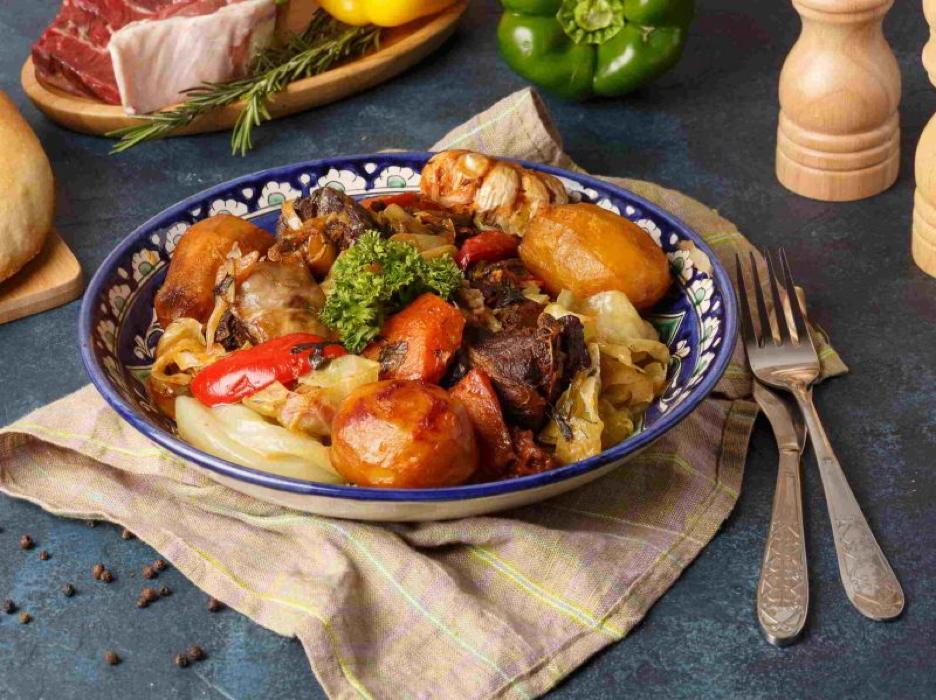
Dimlama is a useful and nutritious dish of Uzbek cuisine, filled with all sorts of vegetables with pieces of meat. An analogue is vegetable stew. The name of the dish comes from the verb “dimlamok”, which means “stew ”.
Damlama is mostly cooked in summer and autumn, in the season of vegetables abundance, and also in winter, but with a smaller set of juicy ingredients.
Damlama will turn out inimitably delicious, if it is cooked outside over an open fire or at the hearth. The taste of vegetables stewed in its own juice, with the aroma of real smoke will turn this dish into culinary magic.
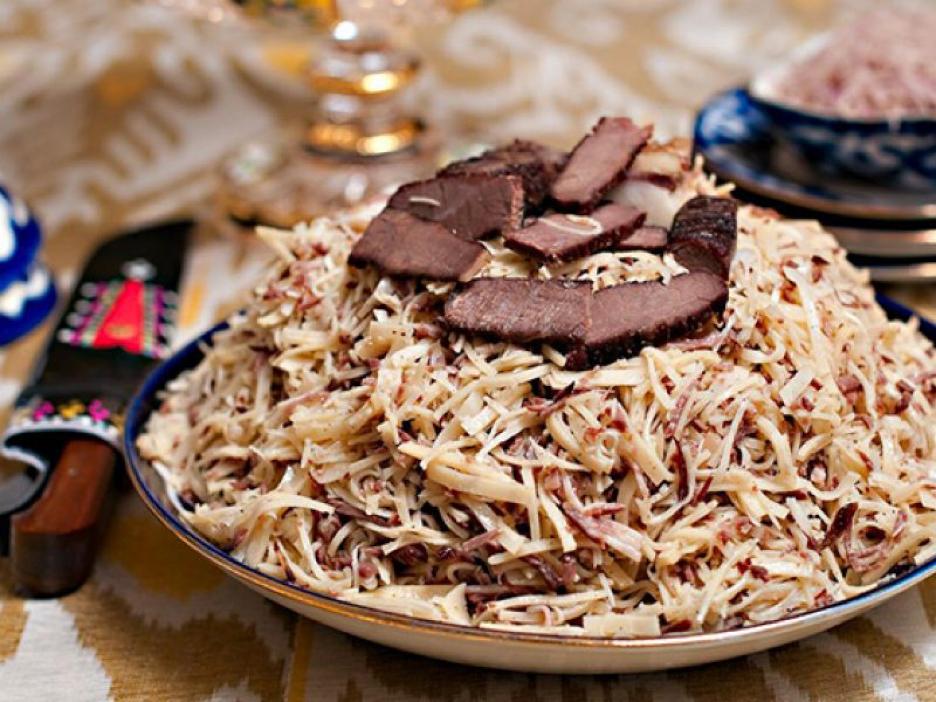
Uzbek dish – Norin. The unusual taste of lace-like noodles in combination with horsemeat (classic version) makes the dish taste fantastic.
Norin (narin) – is home-made noodles with horsemeat, more precisely, with kazy (horse meat sausage). However, recipes of norin allow using beef and mutton.
In Uzbekistan norin is a traditional dish of great festivals, cooked not only for the guests, but also for all the neighbors. It is a special dish for Ramazan Hait (Eid-al Fitr), when the fest begins with bustle with treats – from one to take, others to treat – with cold norin on a sunny flat bread, with hot pilaf in colored plate – kosa, or with baursak, urama, chak-chak and many others. This Uzbek tradition symbolizes peace, friendship, prosperity and, most importantly, holds good-neighborly relations.
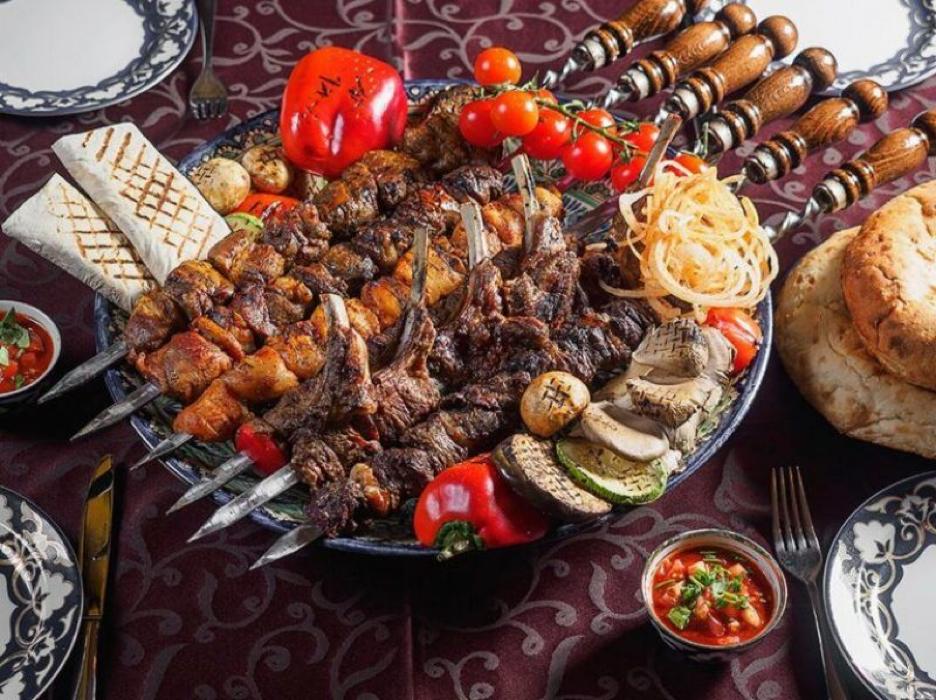
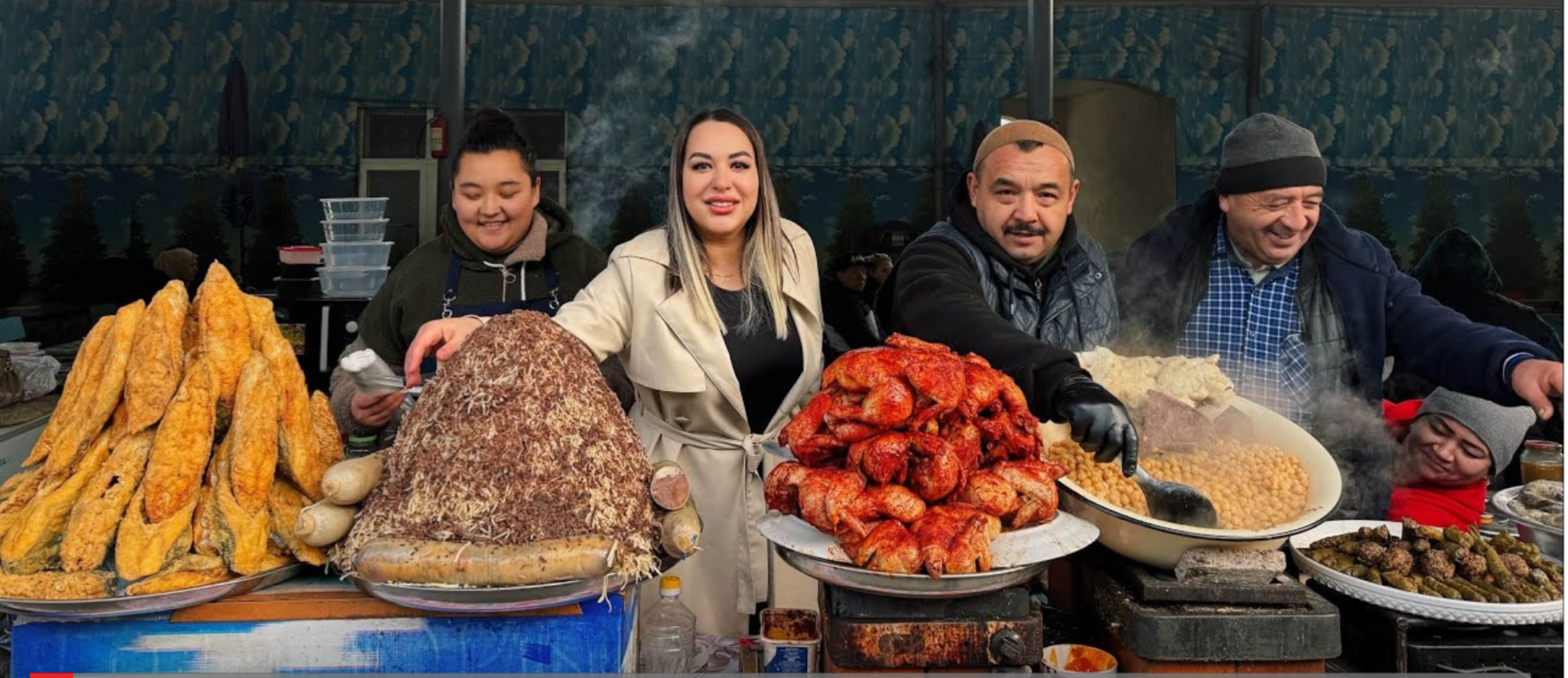
One cannot imagine Uzbekistan without sunny flatbread, hot pilaf and, of course, without a delicious shish kebab (kabob). Smoke that is soaked in the aroma of fried meat on the coals goes up from the barbecue, appealing for gourmets.
The seller of a shish kebab does not even need to call customers with loud exclamations, the scent of shish kebab will do it itself much more efficiently.
In Uzbek cuisine, you can meet shish kebab of mutton, beef, chicken meat, liver (gigar kabob), the shish kebab can be ground or made of small or very large pieces of whole meat.
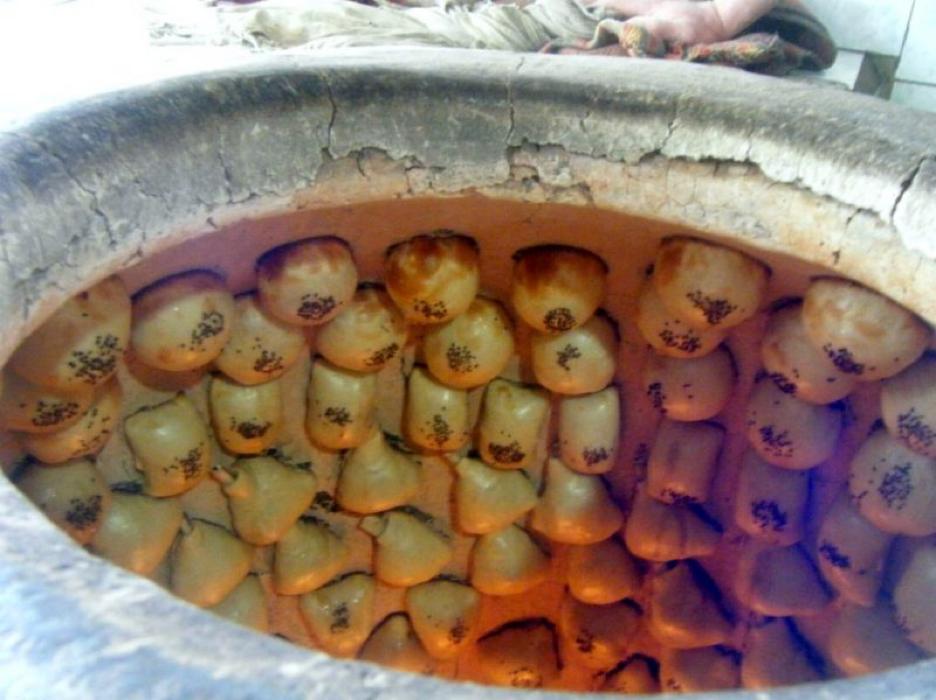
Samosa (also spelled samsa, somsa, samoosa) is an Uzbek food consisting of flaky pasties with various fillings, both served at ceremonies and eaten in an everyday life. Samosa may have different shapes and forms and be cooked in a multiplicity of ways.
In the former times samosa was cooked only in a tandir oven (a Central Asian clay oven, also spelled tandyr, tandoor), on coals. Samosa baked in a tandir has a specific taste and flavour and is filled with small pieces of meat, onion and some amount of fat from a sheep’s tail.
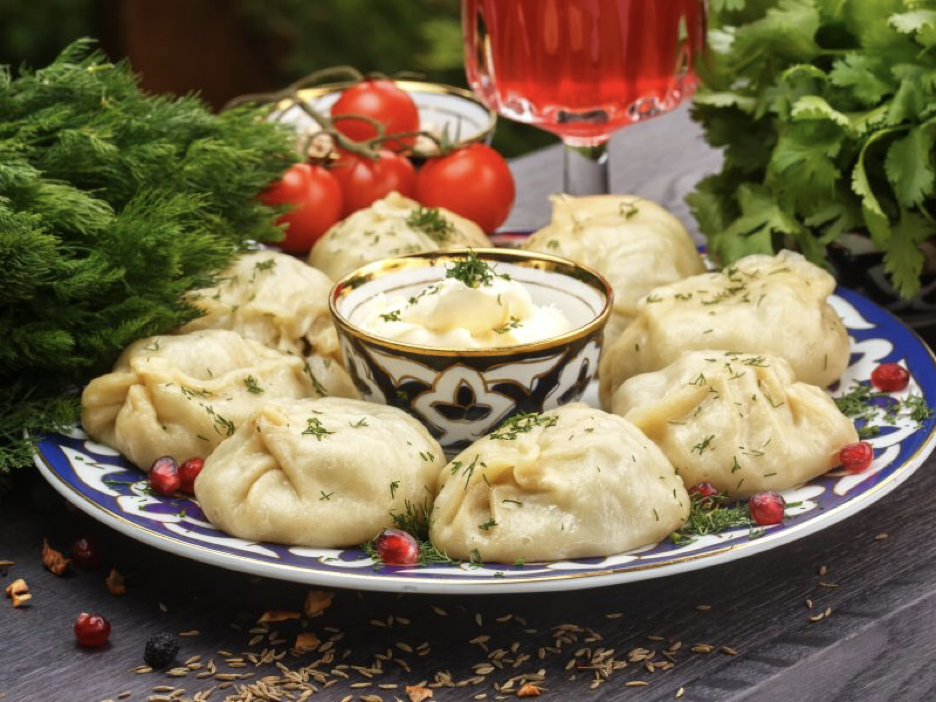
Manti (Manty, Manties or Mantu) is a dish of Uzbek cuisine that has the form of large dumplings filled with meat and steamed in a special pot. Manti is a true ‘nomad’: it first came to Central Asia from China, and then its various versions spread to Russia and other European countries.
Manti is a meal usually cooked for dinner or supper. It is served in a large lagan (dish), and then each person puts the amount of manti he wants into their plate. In Uzbekistan manti, like most of the other Uzbek dishes, is traditionally eaten with the hands. Actually, it is rather difficult to eat it with the help of cutlery, and soon you will also realize that, eaten with the hands, it seems even more delicious, as its filling does not fall out, but remains within the dumpling together with the juice. Therefore, do not hesitate to eat it with the hands: it will in no way breach the etiquette.