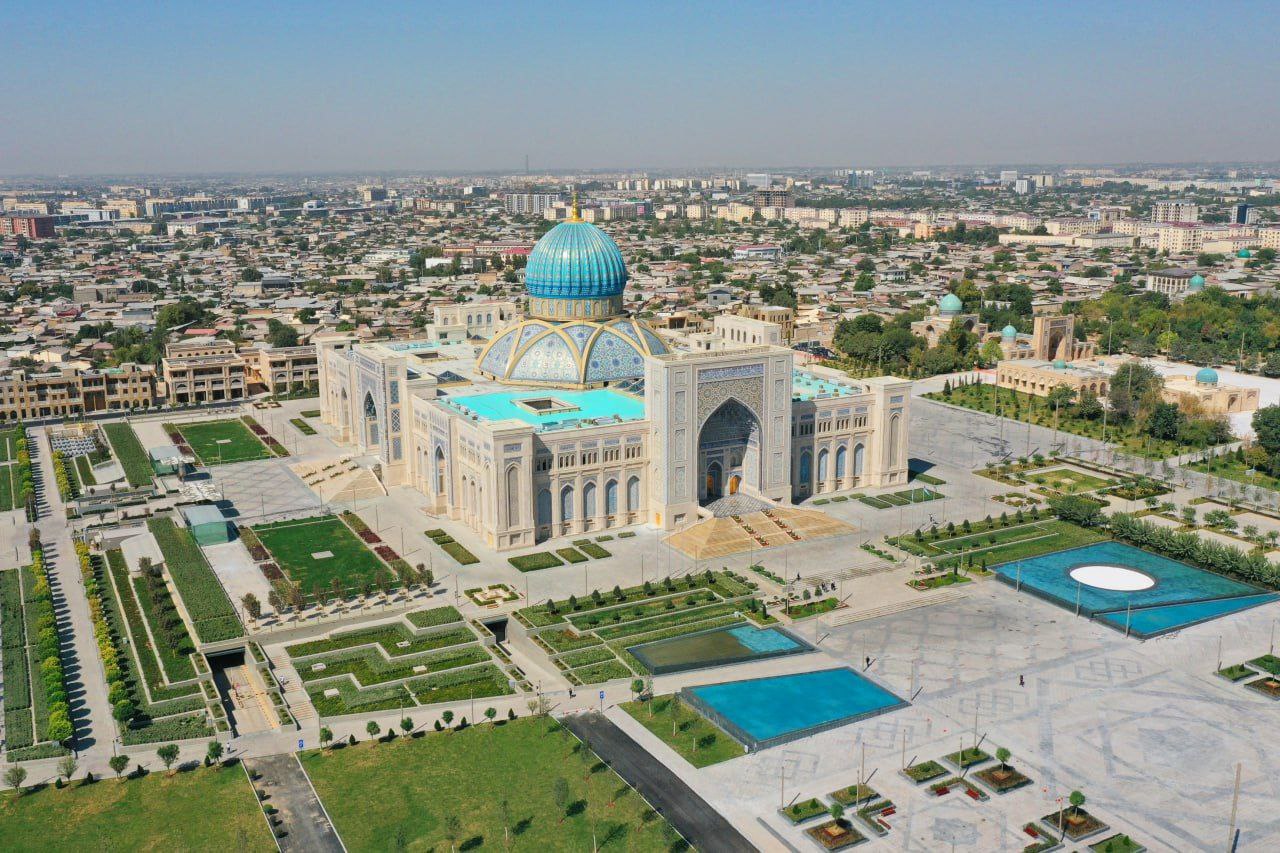
In March 2026, just before the celebration of Ramadan Hayit (Eid), the Islamic Civilization Center officially opened its doors in Tashkent. This impressive complex is dedicated to showcasing the rich history of Islam in Central Asia and has quickly become one of the city’s must-visit attractions for travelers.
The concept of the center was first introduced by Shavkat Mirziyoyev in 2017 during a session of the United Nations General Assembly. It was envisioned as a unique space that connects historical heritage, scientific achievements, and modern development.
After nearly eight years of construction, the center now features a large museum, an extensive library, and various research and educational facilities. Visitors can explore a range of fascinating exhibitions, including the Quran Hall, home to the famous Mushaf of Uthman. Other sections highlight pre-Islamic culture, the intellectual and scientific golden age of the 9th to 13th centuries, the Timurid period, and the contemporary progress of Uzbekistan.
The complex features 5 themed sections: “Pre-Islamic Civilizations”, “The First Renaissance”, “The Second Renaissance”, “Uzbekistan in the 20th Century” and “New Uzbekistan – New Renaissance”
The library is one of the most impressive parts of the complex, housing over 2,500 rare manuscripts and lithographs, around 40,000 printed books, and more than 350,000 digital resources. In addition, nearly 2,000 unique historical artifacts have already been brought back to Uzbekistan, enriching the country’s cultural heritage.
Today, the Islamic Civilization Center is helping to redefine Tashkent as a modern cultural capital—where centuries-old heritage meets innovation and forward-looking development.
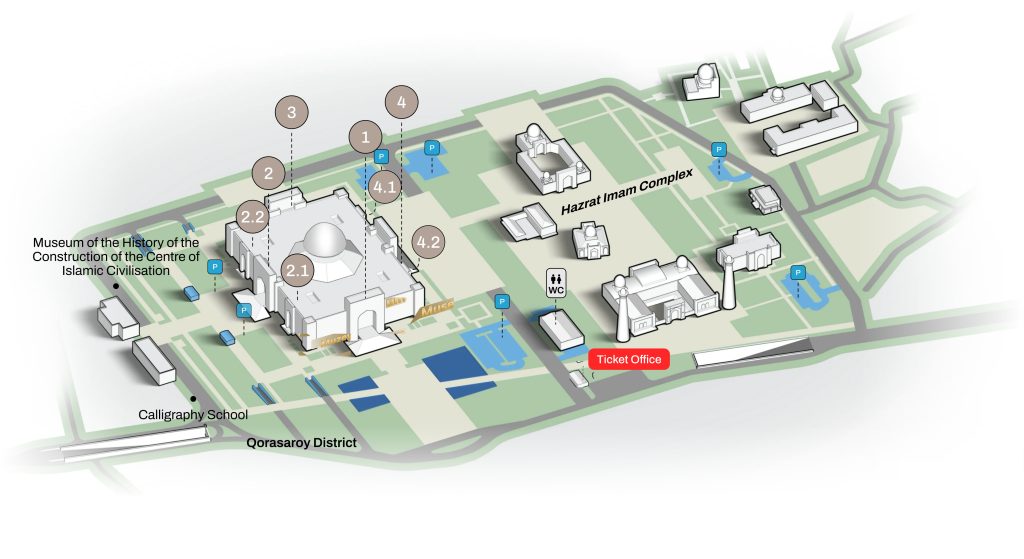
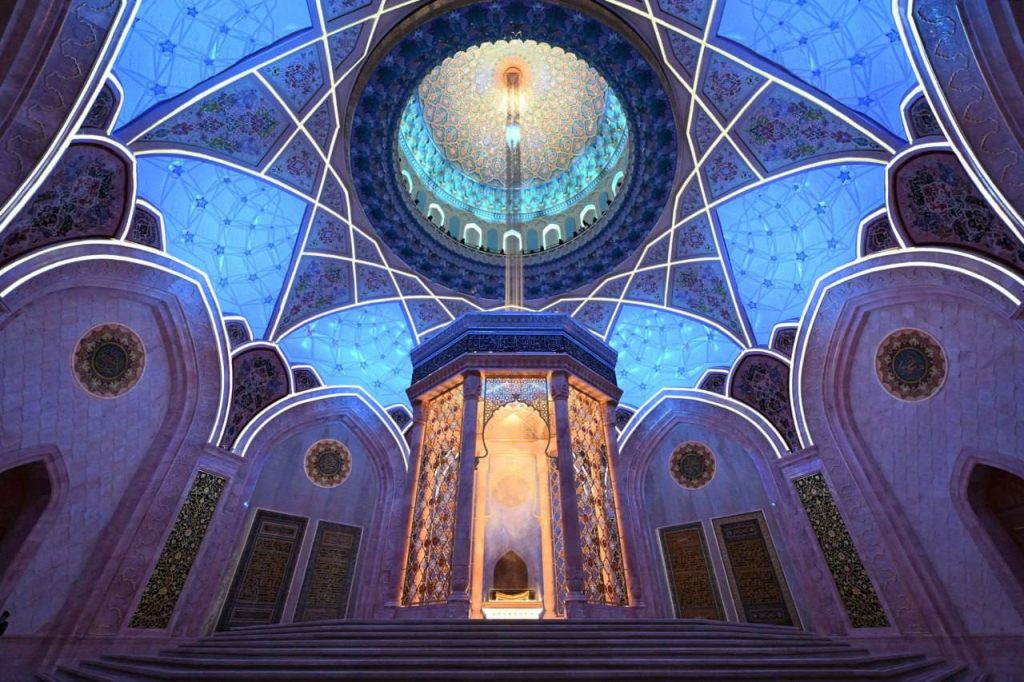
The Islamic Civilization Center of Uzbekistan is located within the famous Hazrati Imam Complex in Tashkent and covers a vast area of 10 hectares. The building itself measures 161 meters in length and 118 meters in width, and consists of three floors. Its central dome rises to an impressive height of 65 meters, making it one of the most striking architectural features of the complex.
Constructed on a 1.8-hectare site, the center offers a total usable space of over 42,000 square meters, reflecting its scale and importance as a major cultural and educational landmark.
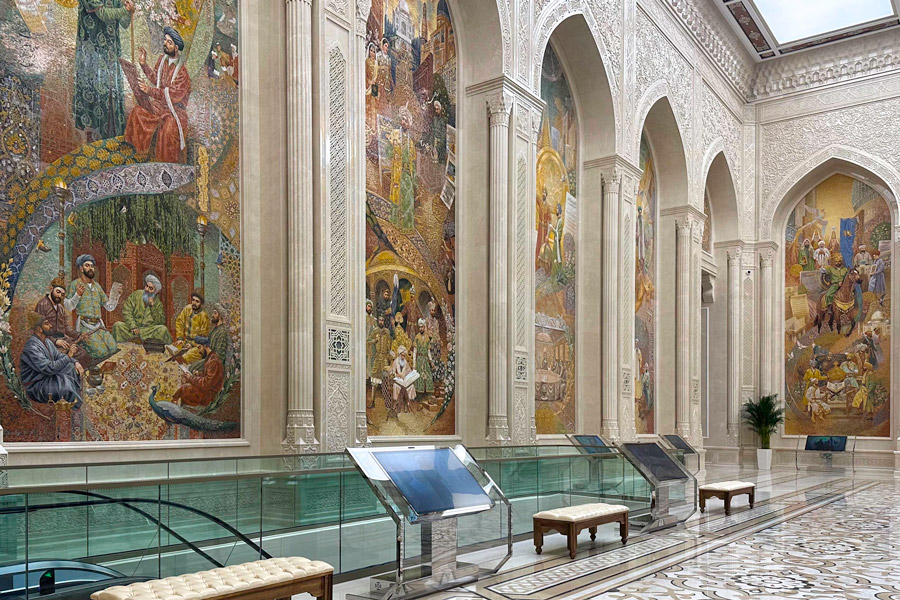
The Hall of Glory is one of the most impressive sections of the Islamic Civilization Center, where visitors can explore the legacy of Central Asia’s greatest scholars, rulers, and cultural figures. The hall features 14 arches depicting key events in the history of the peoples of Central Asia.
First Renaissance (8th–13th centuries)
A special focus is given to the First Renaissance (8th–13th centuries), illustrated through a large панно (art panel) depicting the cultural and intellectual awakening of the region. It highlights architectural masterpieces, as well as scientific and literary achievements of that era.
This hall features representations of prominent historical personalities such as Al-Kharezmi, Ahmad al-Farghani, Imam Al-Bukhari, Imam Termiziy, Ibn Sina (Avitsena), Al-Beruniy, Jaloliddin Manguberdi, Amir Timur, Mirzo Ulughbek, Alisher Navoi, and Zahiriddin Muhammad Babur, along with enlightened Jadid reformers.
Second Renaissance (15th–20th centuries)
Another dedicated panel presents the Second Renaissance (15th–20th centuries), showcasing a later period of revival marked by remarkable developments in architecture, science, and literature across Central Asia.
These stunning fresco-style panels were created using over 110 different colors of micro-mosaic stones. Each tiny piece was carefully placed by hand, showcasing exceptional craftsmanship. The work was carried out in collaboration with skilled specialists from China, combining traditional techniques with international expertise.
The Hall of Pre-Islamic Heritage takes visitors even further back in time, revealing the deep and ancient roots of Central Asia’s history. Archaeological discoveries showcased here highlight tens of thousands of years of human presence in the region.
Among the most remarkable exhibits are stone tools and arrowheads dating back around 80,000 years, uncovered at the Obi-Rahmat Grotto—one of the earliest known sites of human activity in Central Asia.
The hall also features exquisite gold jewelry and artifacts from the 1st millennium BC, linked to the advanced culture of ancient Bactria. Many of these items were previously kept in the United Kingdom and demonstrate the high level of craftsmanship and cultural development of early civilizations.
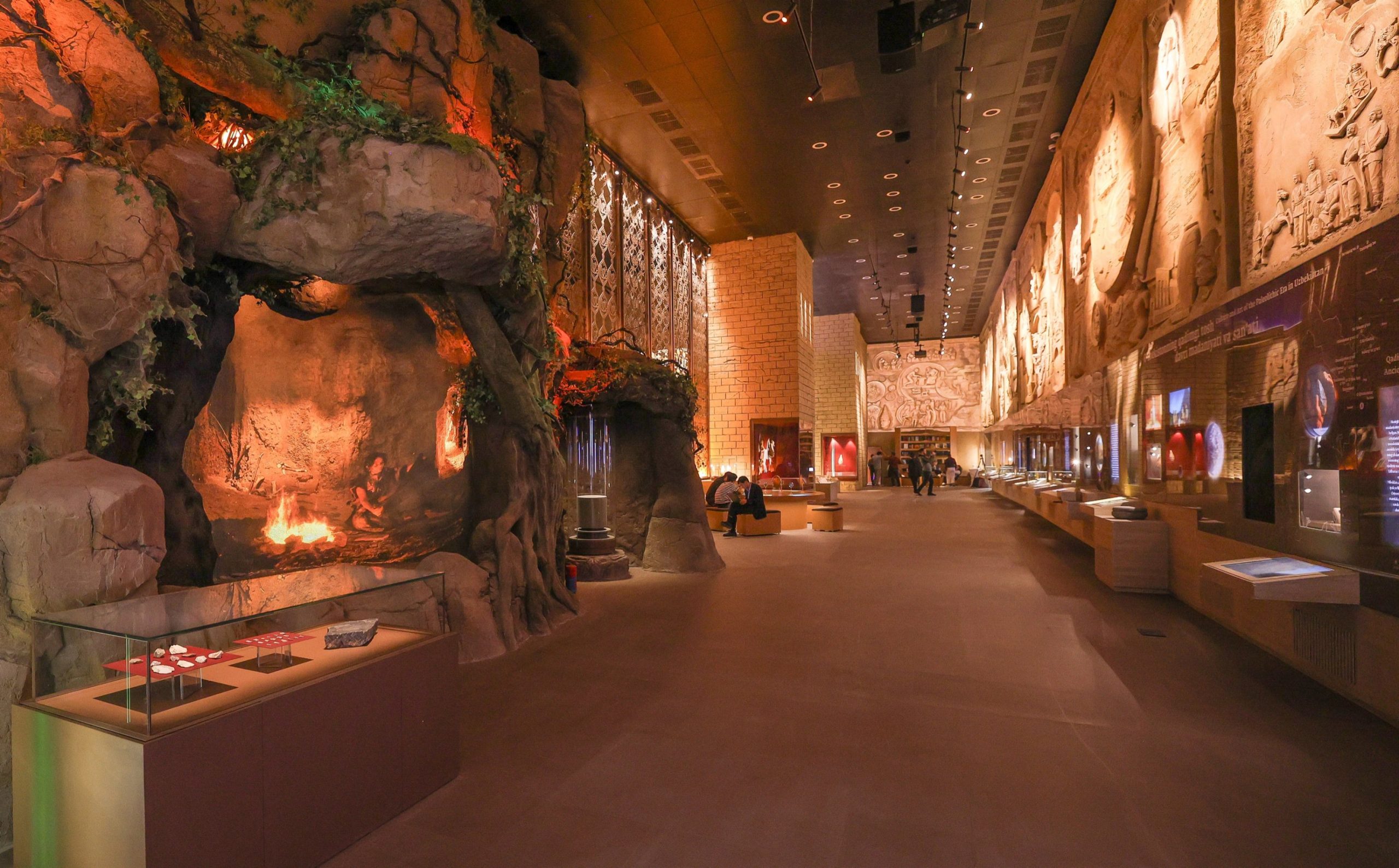
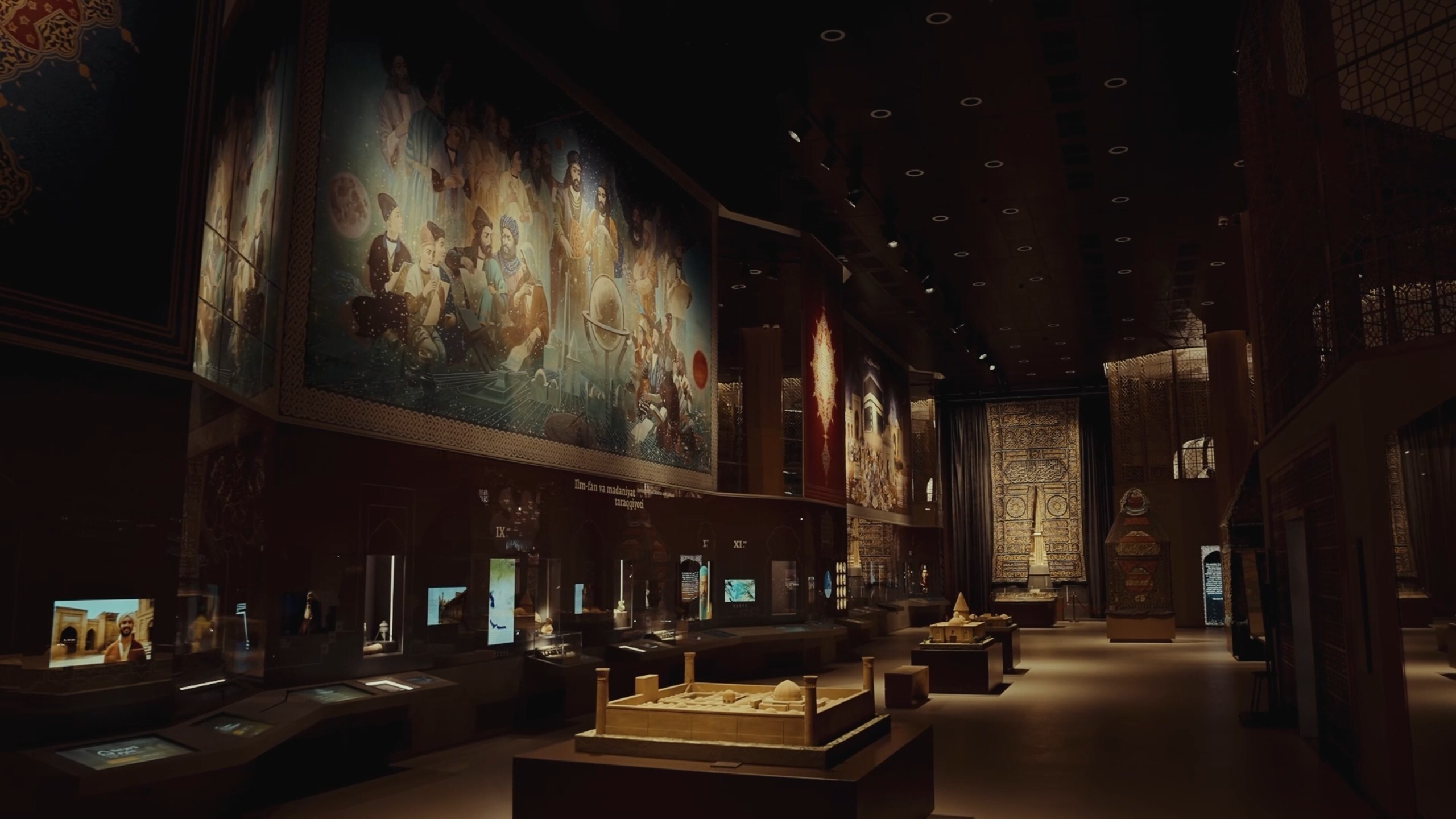
The Wall of Time offers a fascinating journey through more than 3,000 years of statehood in Uzbekistan. This immersive space presents history through detailed bas-reliefs, traditional miniatures, and large-scale artistic compositions that bring different eras to life.
Along the wall, visitors can explore a wide range of exhibits from various historical periods, including numismatic collections (ancient coins), maps, and authentic artifacts. The experience is further enhanced with engaging video content and interactive displays, making it both educational and visually captivating for tourists.
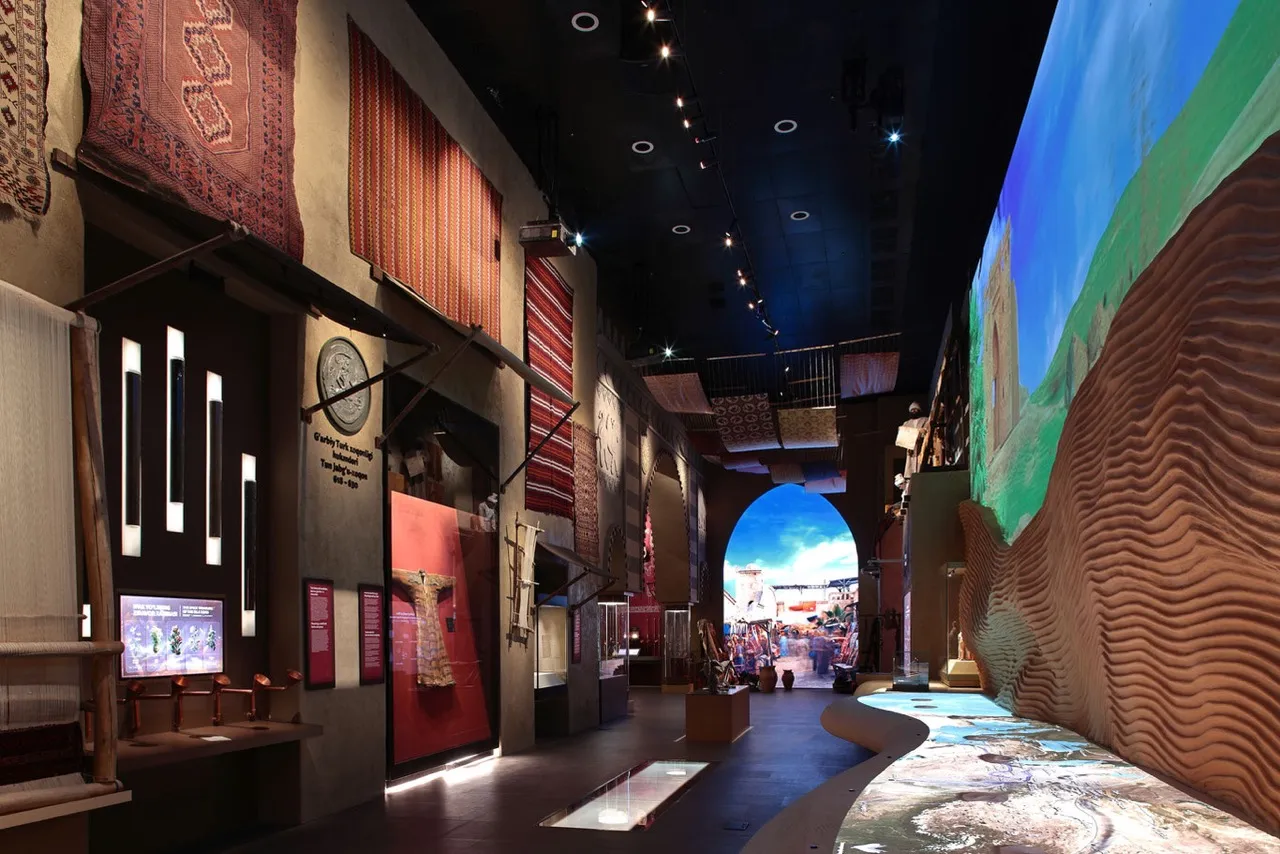
This section of the Wall highlights the roots of Uzbek statehood, tracing the development of ancient civilizations such as Bactria, Sogdiana, Khwarezm, Fergana and Chach. The wall presents a rich visual narrative, including: Bas-reliefs depicting rock carvings, ancient statues, early craftsmanship and battle scenes. 37 display cases with 72 artifacts, 70 ancient coins and 82 scale models offering insight into early Central Asian societies. 59 multimedia installations, including holograms and touch- screen displays, bring key historical developments to life and enable engagement with the region’s pre- Islamic heritage. This immersive presentation conveys the artistic sophistication and societal complexity of civilizations that laid the foundation for later Islamic culture in Uzbekistan.
S2panning approximately 1,200 square meters, the Holy Quran Hall serves as the spiritual heart of the entire complex. Designed as a symbolic centerpiece, this space holds deep religious and historical significance for visitors.
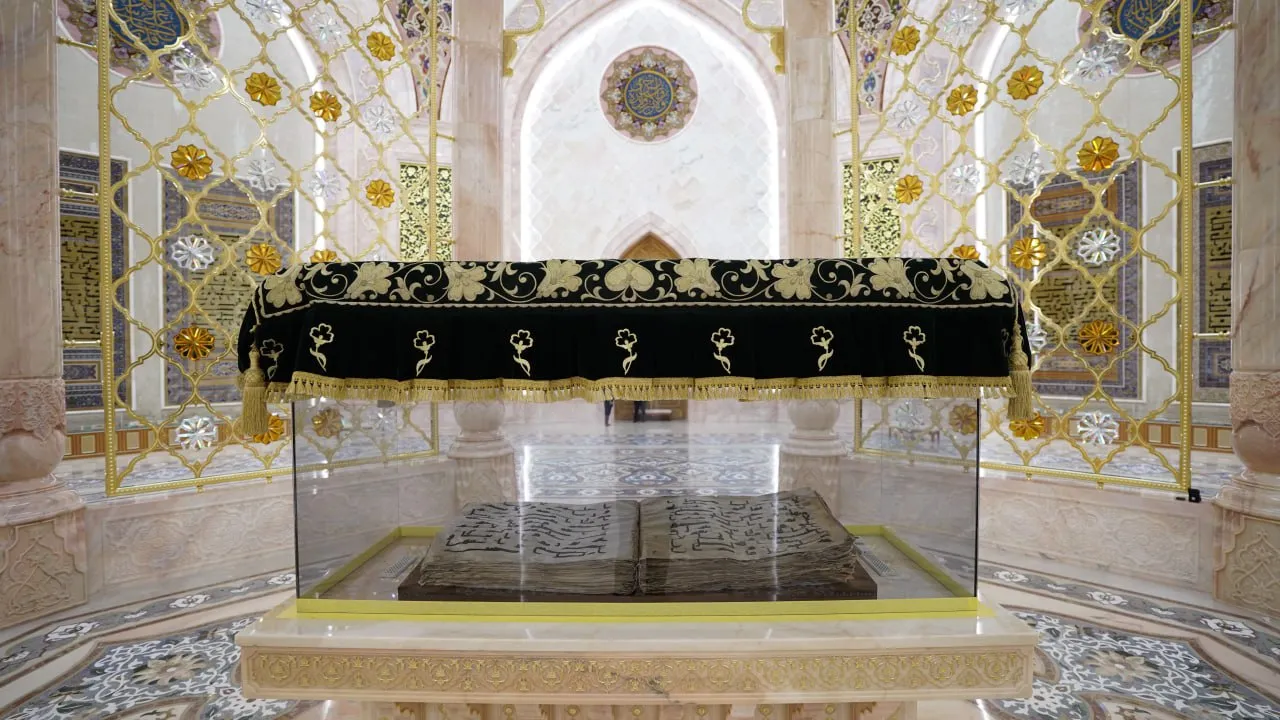
At the center of the hall is the revered Uthman Quran—one of the oldest known copies of the Quran, believed to date back to the 7th century and linked to Uthman ibn Affan (r.a).
According to historical accounts and long-standing tradition, the caliph was martyred while reading this sacred text. It is said that traces believed to be his blood can still be seen on its pages, adding a powerful and emotional dimension to this extraordinary artifact.
Following the death of Uthman ibn Affan (r.a), historical records indicate that the manuscript was preserved in several major Islamic centers, including Kufa, Baghdad, and Damascus. According to widely accepted accounts, in the late 14th century Amir Timur brought the manuscript from Baghdad to Samarkand. It remained there—at one point kept in the famous Bibi-Khanym Mosque—until the 19th century, when it was transferred to St. Petersburg. In 1924, the manuscript was returned to Tashkent, where it has been carefully preserved ever since. Today, it is recognized on the UNESCO Memory of the World Register, highlighting its outstanding global significance.
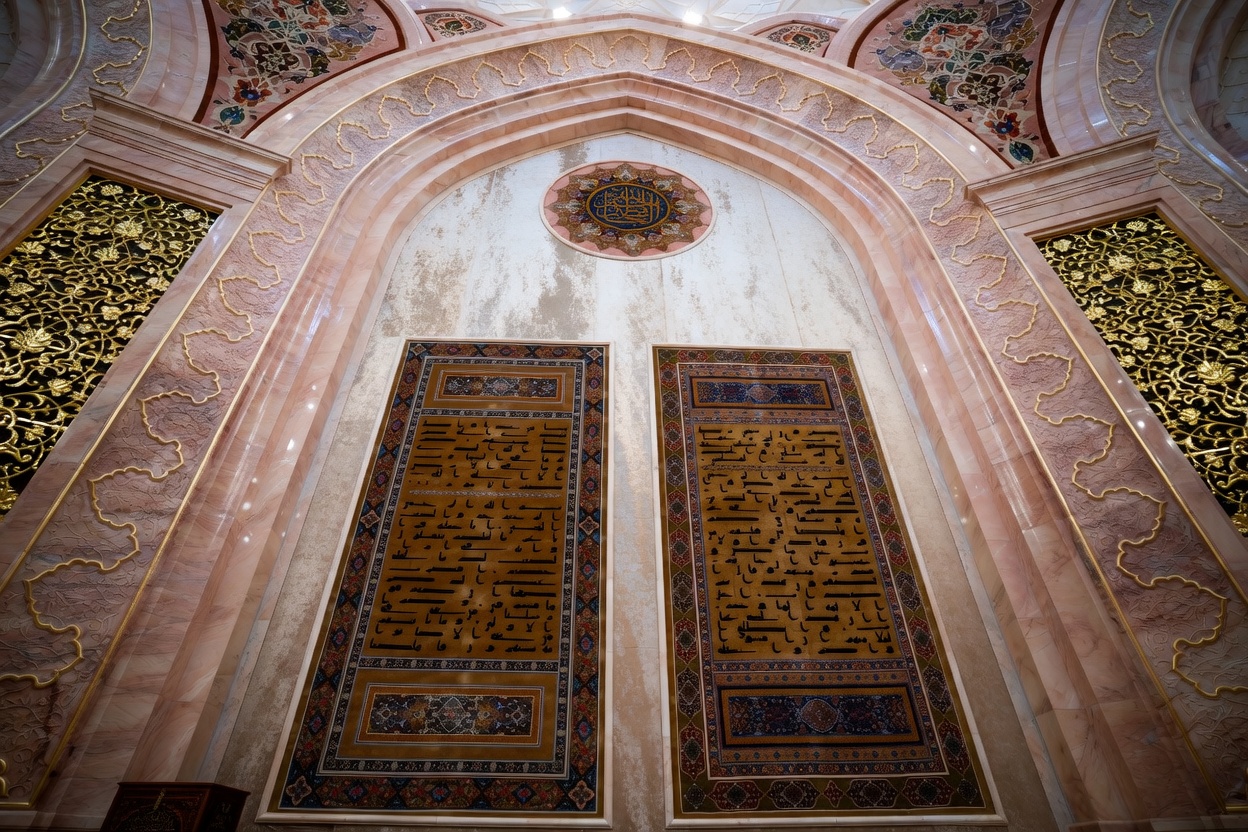
The hall itself is designed on a grand and monumental scale. Suspended above the space where the manuscript is displayed is a massive chandelier weighing around 50 tonnes, adorned with approximately 1.6 million Swarovski crystals. This creates a stunning play of light throughout the hall. The interior is further enhanced by walls finished with elegant pink Portuguese marble, while large handwoven silk carpets feature verses from the Quran intricately woven into their design.
In addition to the main manuscript, the hall showcases other handwritten copies of the Quran dating from the 10th to the 18th centuries. Together, these works illustrate the evolution of Islamic calligraphy and manuscript traditions, placing the revered text within a rich and continuous scholarly heritage.
The “New Uzbekistan – New Renaissance” exhibition highlights the major transformations that have taken place in Uzbekistan over the past nine years under the leadership of Shavkat Mirziyoyev.
This section presents a comprehensive overview of the country’s development, including socio-economic progress, political and legal reforms, as well as cultural and educational advancements. Visitors can explore how Uzbekistan has been undergoing a period of renewal, marked by democratic reforms and significant achievements across various sectors.
The exhibition also showcases the key priorities of both domestic and foreign policy, along with large-scale reforms that have impacted nearly every aspect of public and state life. It offers valuable insight into how modern Uzbekistan is shaping its future while building on its historical legacy.
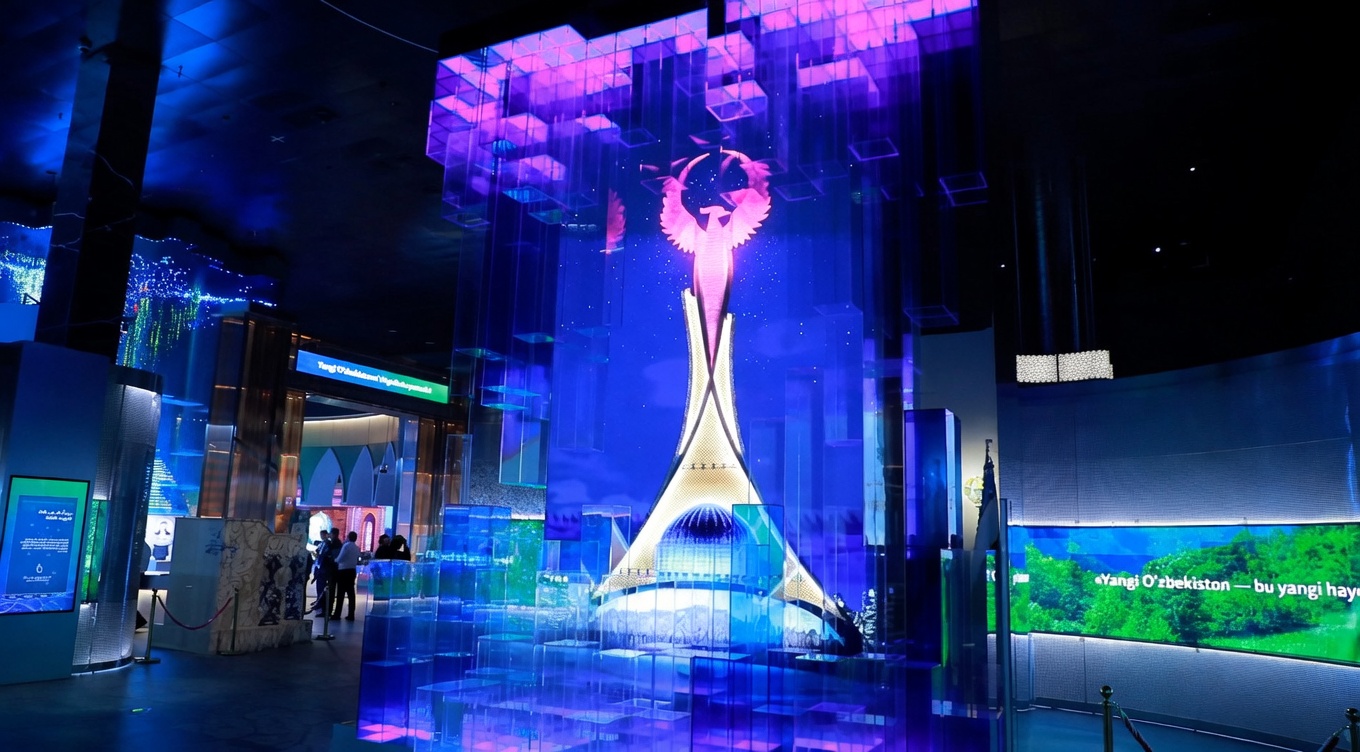
The exhibition is also divided into several themed sections, each highlighting a key area of Uzbekistan’s modern development. These include “The Economy as the Driving Force of New Uzbekistan,” “Major Achievements, Youth and Sports,” “Security and Foreign Policy,” and “Education, Digitalization and Innovation.”
Additional sections focus on cultural and educational reforms, environmental protection and tourism development, as well as the formation of a new civil society and the role of local communities (mahalla). The exhibition also explores progress in architecture and large-scale social development projects across the country.
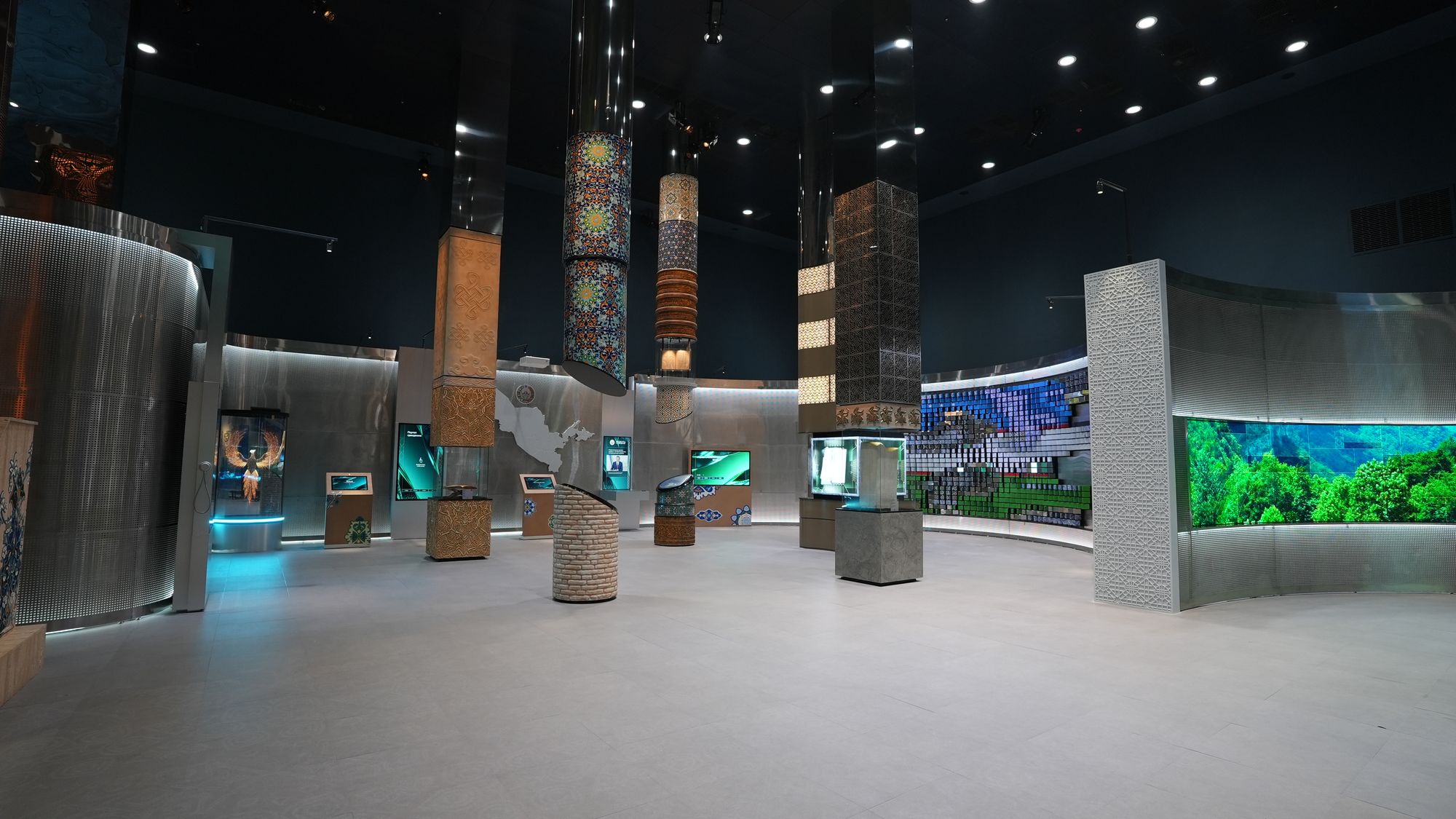
The “New Uzbekistan – New Renaissance” exhibition was developed based on 52 project proposals put forward by both international and local scholars. These initiatives are being implemented through close collaboration between foreign experts and Uzbek researchers, ensuring a well-rounded and globally informed presentation.
The Islamic Civilization Center in Tashkent is more than just a museum—it is a powerful symbol of Uzbekistan’s rich past and its ambitious future. From ancient archaeological discoveries and world-renowned manuscripts to modern exhibitions showcasing a new era of development, the center offers a complete journey through time.
Whether you are interested in history, culture, religion, or architecture, this landmark provides a unique and unforgettable experience in the heart of Tashkent. Each hall tells a story, connecting centuries of knowledge, creativity, and progress.
If you are planning a trip to Uzbekistan, the Islamic Civilization Center is truly a must-visit destination.
capture.