
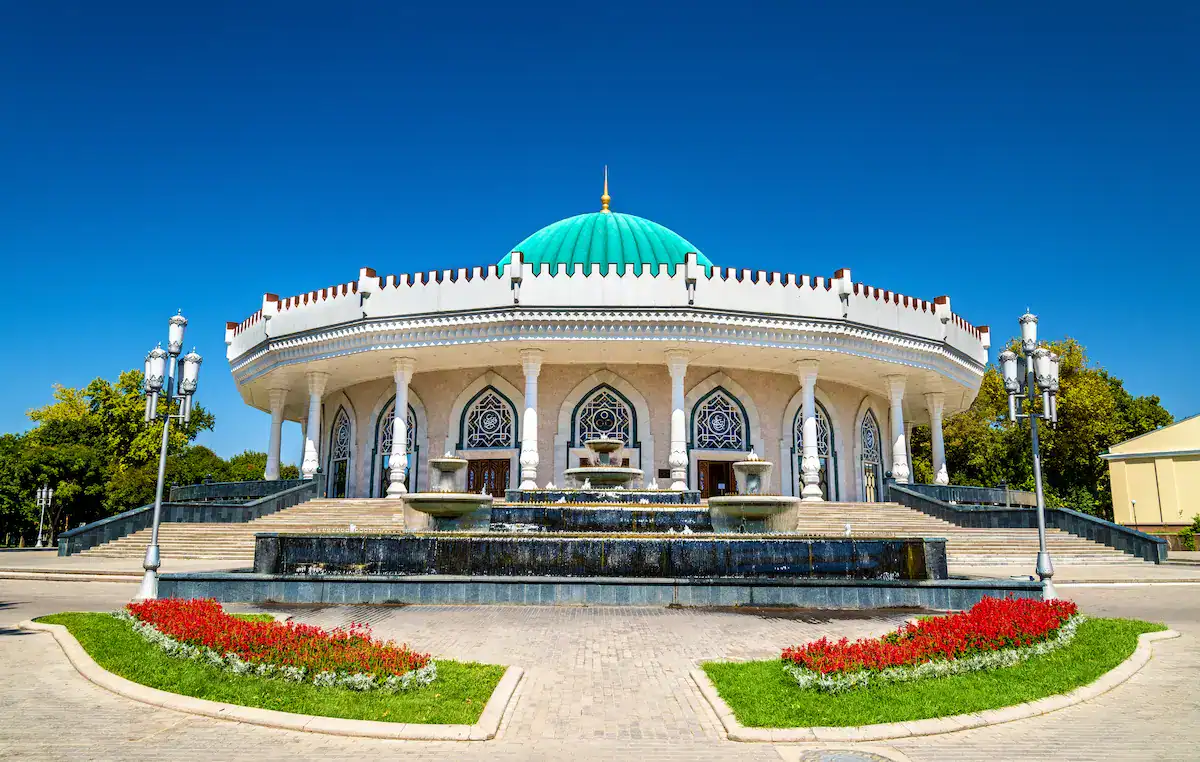
The Amir Timur Museum in Tashkent is one of the most fascinating historical landmarks you can visit in Uzbekistan. The museum is home to over 5,000 artifacts that tell the story of the powerful Timurid Dynasty — one of the greatest empires in Central Asian history.
Opened in 1996 in the heart of Tashkent, the museum is impossible to miss. Its stunning architecture is no coincidence — the building was intentionally designed to mirror the iconic Gur-e Amir Mausoleum in Samarkand, the final resting place of Amir Timur himself. The reason behind this design choice? No one knows for certain — and that mystery only makes it more intriguing.
Whether you are a history lover or simply curious about Uzbekistan’s rich past, the Amir Timur Museum is a must-visit stop on any Tashkent itinerary.
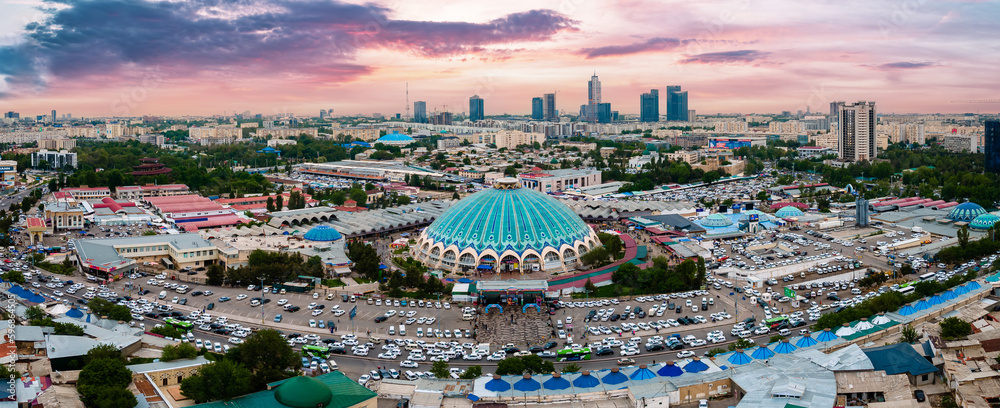
Right in the heart of Tashkent sits one of Central Asia’s most iconic markets — Chorsu Bazaar. Instantly recognizable by its striking turquoise dome, this centuries-old bazaar is a sensory experience like no other.
Inside, you will find everything from traditional Uzbek clothing and handcrafted souvenirs to fresh spices, dried fruits, and local street food. It is the kind of place where tourists and locals shop side by side, making it one of the most authentic spots in the city.
Whether you are hunting for the perfect souvenir or simply want to soak up the local atmosphere, Chorsu Bazaar delivers an experience that no other place in the city can match. A visit here is not just shopping — it is a window into the real everyday life of Tashkent.
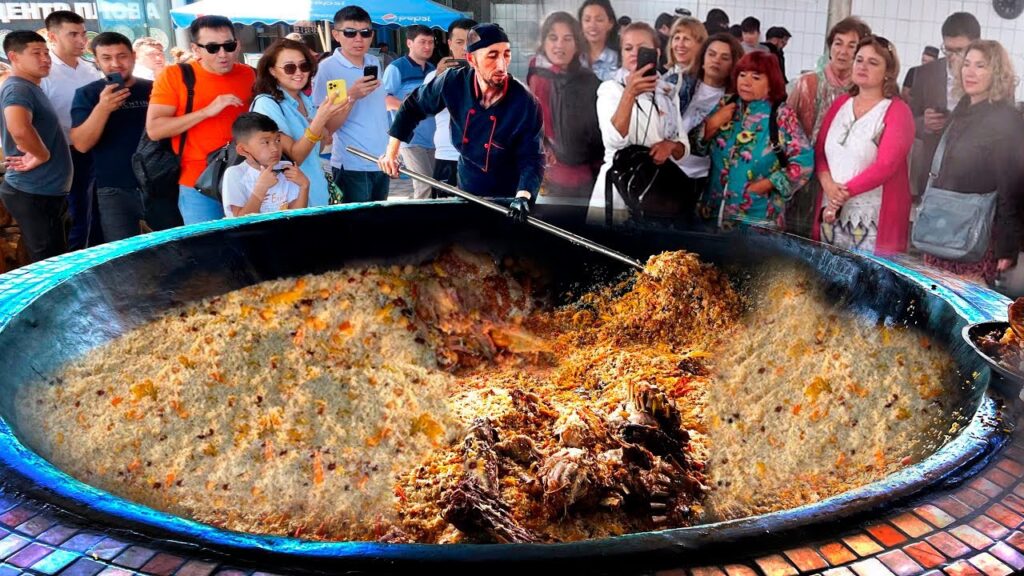
No trip to Uzbekistan is complete without trying plov — the country’s most beloved national dish. More than just a meal, plov is a symbol of Uzbek hospitality and cultural identity, served at weddings, celebrations, and family gatherings across the country.
The best place to experience it in Tashkent is the Central Asian Plov Center, where plov is slow-cooked in giant wood-fired kazans (traditional cast-iron cauldrons) for that rich, authentic flavor. The menu is simple — plov, fresh salad, and tea — but you can customize your plate with extra meat, an egg, or a slice of kazy (horse sausage).
Simple, generous, and absolutely unforgettable — this is the one food experience you cannot miss in Tashkent.
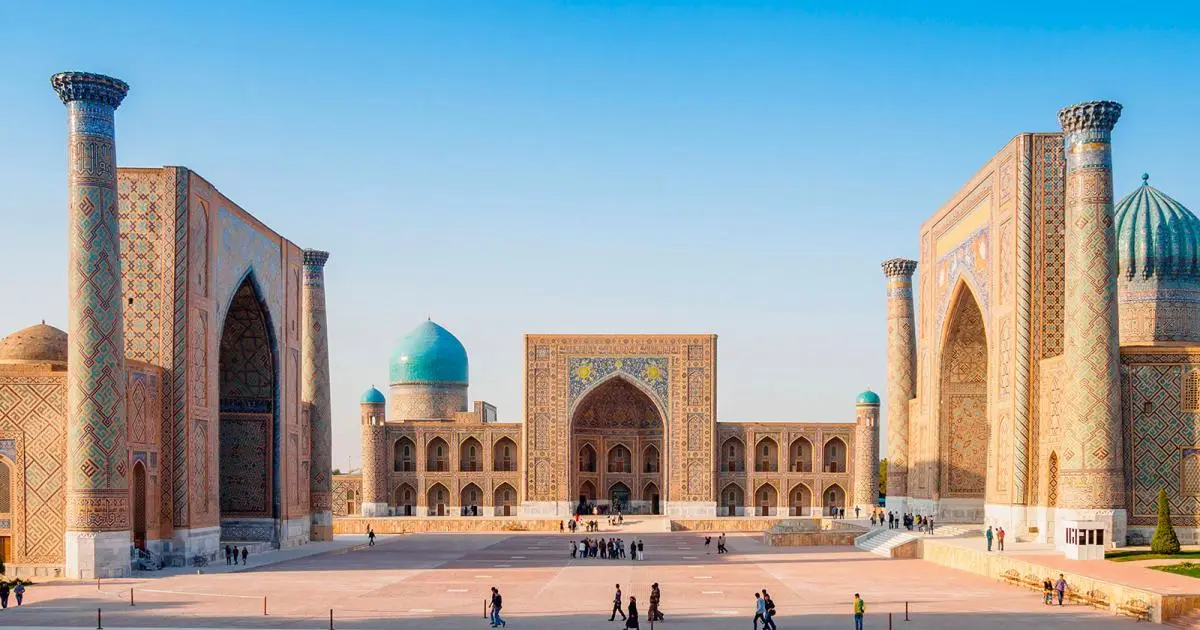
At the heart of Samarkand stands one of the most breathtaking sights in all of Central Asia — the Registan. Adorned with intricate majolica tilework, stunning mosaics, and perfectly proportioned archways, this magnificent ensemble is a masterpiece of Islamic architecture that will leave you speechless.
The Registan is made up of three grand madrasahs built side by side, creating one of the most awe-inspiring public squares ever constructed. Despite being partially destroyed by Chinggis Khan, the complex is home to some of the world’s oldest preserved madrasahs — a testament to the resilience and brilliance of Uzbek heritage.
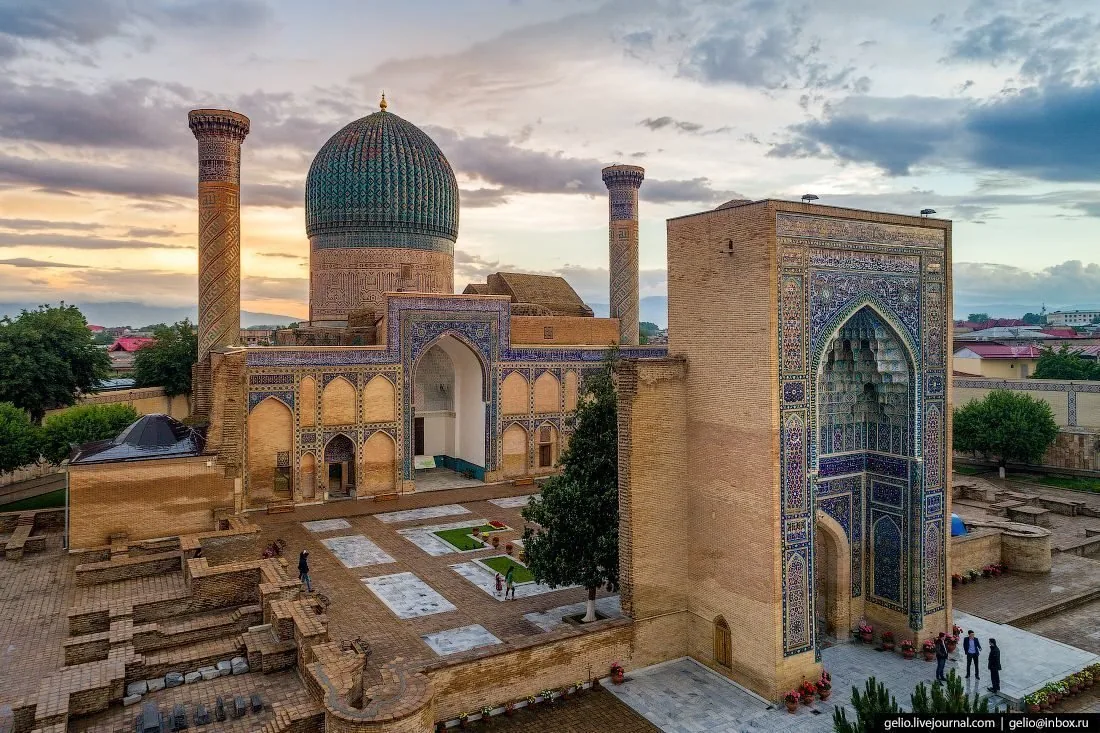
One of the most sacred and visually stunning landmarks in Samarkand, Gur-e-Amir is the final resting place of the great 14th-century conqueror Amir Timur, along with his sons and grandsons. This ancient mausoleum carries centuries of history within its walls — and you can feel it the moment you arrive.
What makes Gur-e-Amir truly unforgettable is its iconic azure dome, shaped like a fluted melon and covered in breathtaking turquoise tilework. It is one of the finest examples of medieval Islamic architecture in all of Central Asia.
Whether you are a history lover or simply curious about Uzbekistan’s rich past, the Amir Timur Museum is a must-visit stop on any Tashkent itinerary.
Ark of Bukhara is essentially a city within a city — a massive royal fortress that has survived for over 15 centuries. From the 5th century all the way to the early 20th century, this ancient citadel served as the grand residence of the Emirs of Bukhara, making it one of the longest-inhabited royal structures in Central Asia.
Despite being heavily damaged when the Red Army bombed it in 1920, the Ark still radiates the power and grandeur of its royal past. Today, the remaining quarters have been transformed into fascinating museums, where you can explore the throne room, royal stables, and artifacts that bring Bukhara’s rich history back to life.
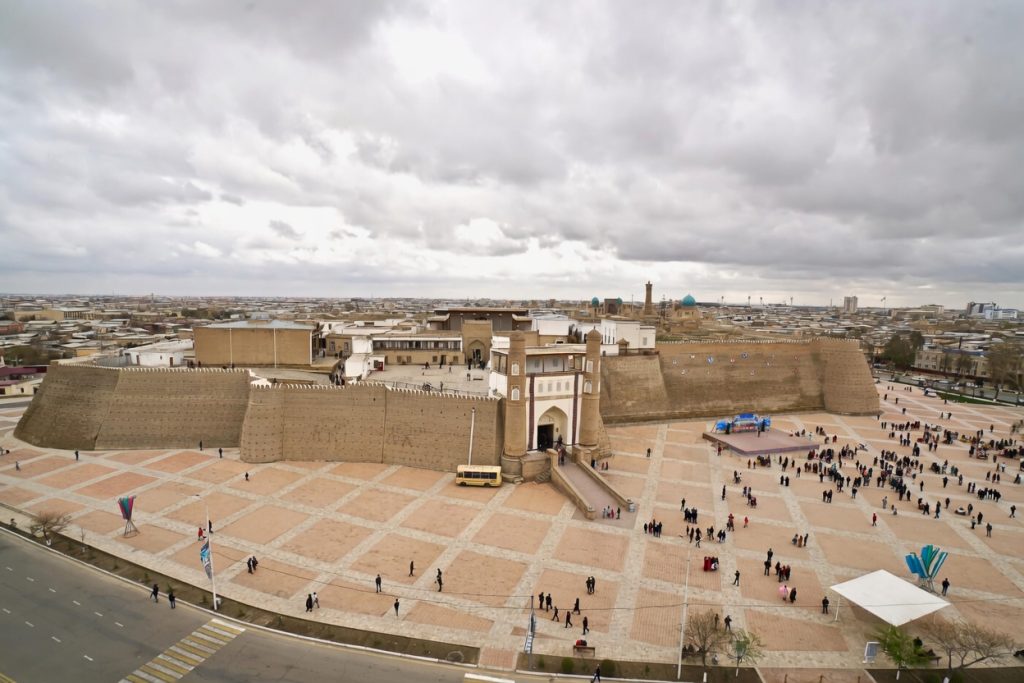
Ark Bukhara
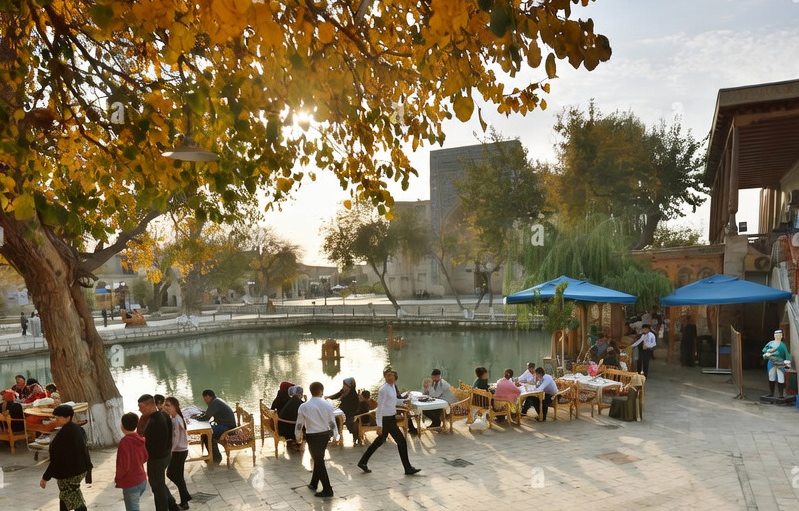
Tucked in the heart of Bukhara’s old city, Lyab-i Hauz is one of the most peaceful and charming spots in all of Uzbekistan. Built in the early 17th century, this beautiful pond is one of the few remaining hauz (reservoirs) in Bukhara, surrounded by centuries-old mulberry trees and fed by an ancient canal.
The plaza around it is the perfect place to slow down, sip tea at a nearby chaikhana, and soak up the timeless atmosphere of old Bukhara. Just a short walk south lies the historic Jewish Quarter — a fascinating and often overlooked neighborhood that offers a unique glimpse into Bukhara’s remarkably diverse cultural heritage.
Together, Lyab-i Hauz and the Jewish Quarter make for one of the most authentic and memorable walks in Uzbekistan.
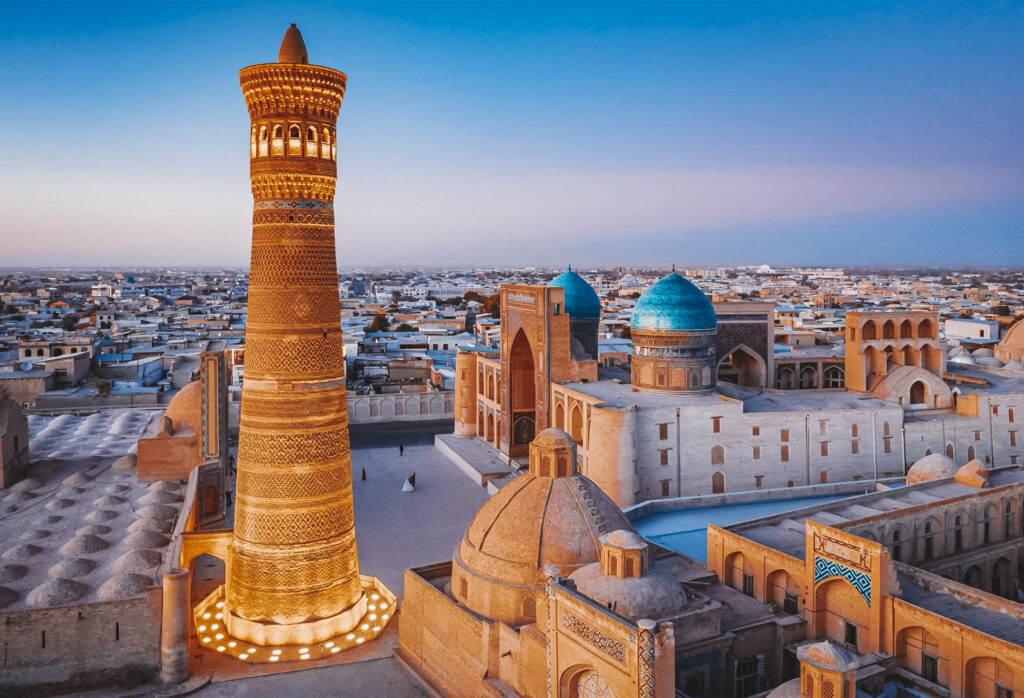
Rising dramatically above the Bukhara skyline, the Kalon Minaret is one of the most remarkable architectural achievements in Central Asia. Built in 1127 by the Karakhanid ruler Arslan Khan, this ancient tower has been standing tall for nearly 900 years — and it is just as impressive today as the day it was completed.
Designed by a master architect known simply as Bako, the minaret takes the form of a circular brick tower that elegantly narrows as it rises — stretching 45.6 meters (150 feet) into the sky, with a base diameter of 9 meters tapering to 6 meters at the top. The intricate brickwork patterns that decorate its exterior make it a true masterpiece of medieval Islamic architecture.
Standing at its base and looking up, it is easy to understand why the Kalon Minaret has been captivating visitors — and even conquerors — for centuries.
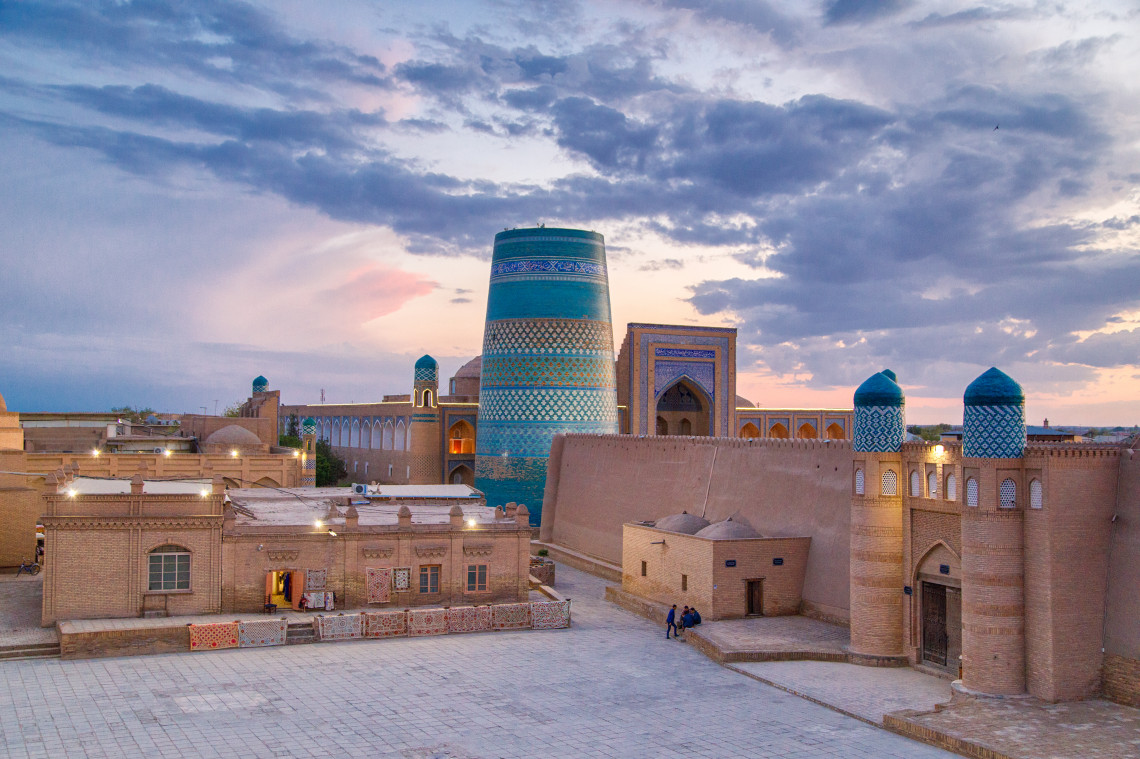
Stepping into Khiva feels like travelling back in time. One of the world’s oldest living cities at over 2,000 years old, Khiva — also historically known as Khorezm — is a place unlike anywhere else in Uzbekistan.
Enclosed within its iconic crenellated brick walls lies a treasure trove of ancient mosques, madrasahs, minarets, and palaces, all remarkably well preserved. At its heart sits Itchan Kala — the walled inner city that UNESCO designated as Uzbekistan’s very first World Heritage Site, and for good reason.
If you can, spend at least one night in Khiva. As the sun sets and rises over the ancient rooftops, the old city transforms into something truly magical — a view that no photograph can fully capture.
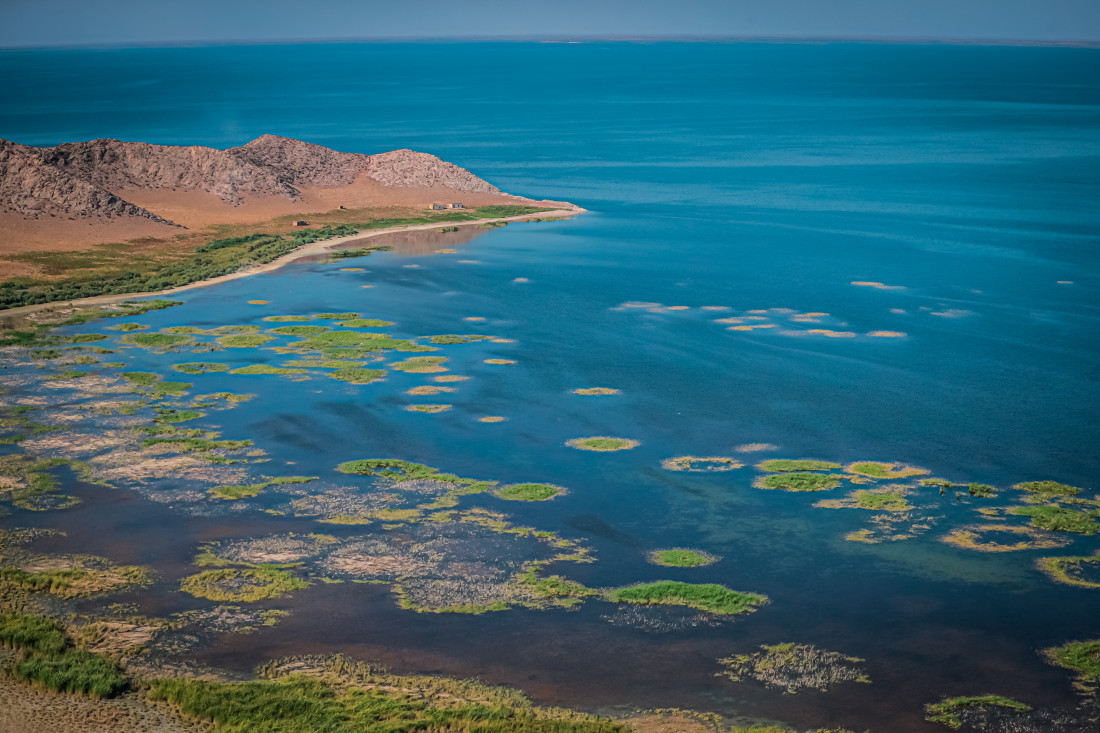
Hidden deep within the vast Kyzylkum Desert, Aydarkul Lake is one of Uzbekistan’s most unexpected and rewarding natural escapes. Originally created during the Soviet era, this semi-natural lake has grown to cover an impressive 4,000 square kilometers, making it one of the largest lakes in Central Asia.
What makes Aydarkul truly special is the contrast — crystal blue water stretching endlessly against golden desert sands. It is not just a beautiful sight, but also a destination with plenty to do — from camel rides and yurt stays to fishing, swimming, and stargazing under one of Central Asia’s most unspoiled night skies.
If you are looking for an off-the-beaten-path adventure in Uzbekistan, Aydarkul Lake belongs on your list.
Stepping into Khiva feels like travelling back in time. One of the world’s oldest living cities at over 2,000 years old, Khiva — also historically known as Khorezm — is a place unlike anywhere else in Uzbekistan.
Enclosed within its iconic crenellated brick walls lies a treasure trove of ancient mosques, madrasahs, minarets, and palaces, all remarkably well preserved. At its heart sits Itchan Kala — the walled inner city that UNESCO designated as Uzbekistan’s very first World Heritage Site, and for good reason.
If you can, spend at least one night in Khiva. As the sun sets and rises over the ancient rooftops, the old city transforms into something truly magical — a view that no photograph can fully capture.